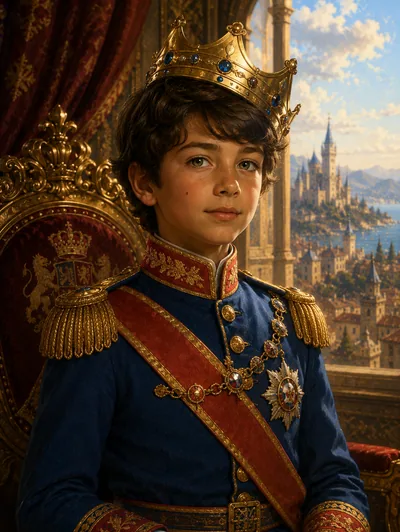
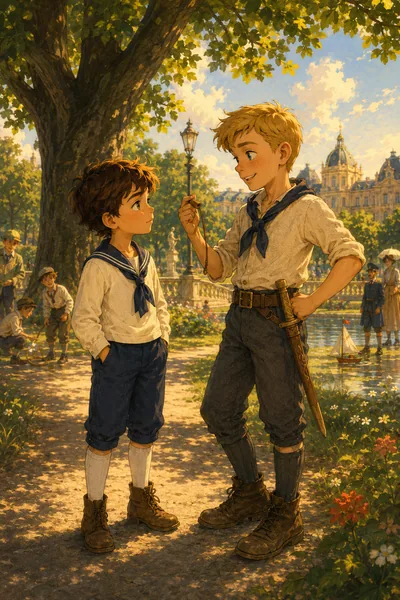
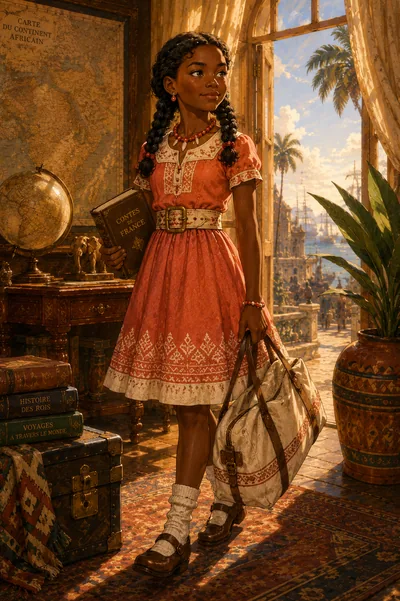
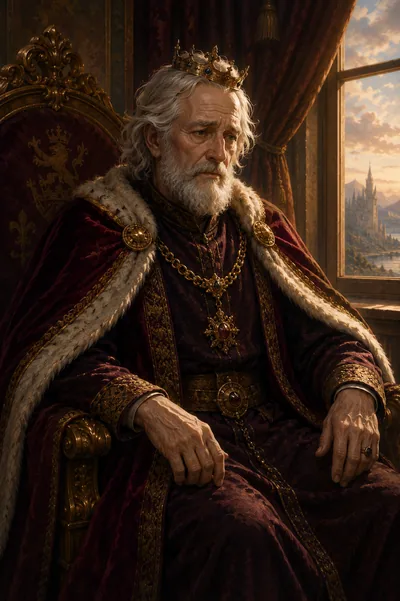
Who's who in Korczak's novel about a boy king: what each character is like, what they do in the story, and a line from the book that shows who they are. Illustrated with the portraits from our English audiobook. Light spoilers throughout.
Korczak's cast is small at the centre and huge at the edges. Around one lonely boy stand a handful of people he truly trusts, a council of ministers he has to learn to manage, and a ring of foreign kings who watch his reforms with growing suspicion. Most of the adults have no names at all, only titles, which is part of the point: to a child-king they are the Prime Minister, the Minister of War, the doctor. A note on names: the hero is Maciuś in the Polish original and in our English audiobook; many English readers know him as Matt.
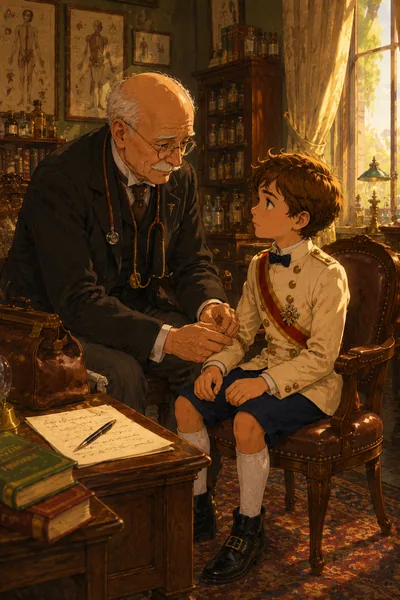
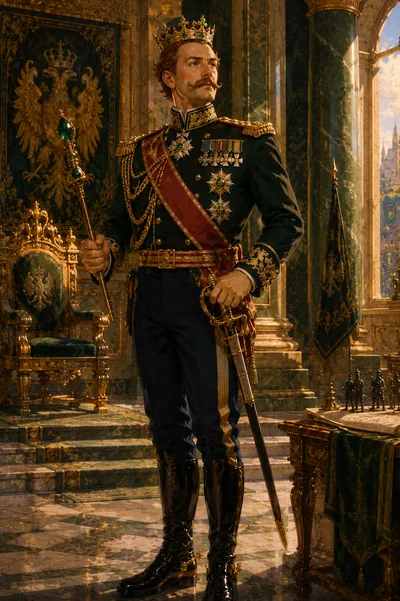
The only son of King Stefan the Wise, orphaned and crowned while still so small that he cannot open the palace doors. He is serious, stubborn, fiercely fair-minded and very lonely. He learns to write just so that he can send a letter to a friend. Maciuś grows more than anyone else in the book: he runs away to the war under the name Tomek and learns what trenches and retreat really are, arrests his ministers and then realises he cannot rule without them, and becomes "Maciuś the Reformer", who gives children letters, audiences and at last a parliament. His great strengths are courage and a real wish to make people happy. His weaknesses are impatience and trusting the wrong people. Even defeated, he refuses to stop calling himself king.
"After all, I am the King, so I have the right to give orders. And yet I have to obey everybody."Maciuś, chapter 2
Felek
Best friend · a sergeant's son
A cheeky, fearless boy from the palace yard, the son of a sergeant in the palace guard, and the first friend Maciuś ever makes. Felek takes the king to the war, fights beside him as "Mountain-Mover", later joins the air force, and it is his information that helps get Maciuś rescued. Back in peacetime, Maciuś makes him the children's minister, and Felek cannot handle the power. He renames himself Baron von Rauch, takes bribes, keeps parcels meant for other children and lets the spy-journalist use his signature. When he is found out, he confesses in tears, and Maciuś forgives him. Felek stays at his side to the very end, in the lion house.
"Whenever you need help, just whistle, and I will come at the first call."Felek's first letter to Maciuś, chapter 3
Klu-Klu
Bum-Drum's daughter · the bravest person in the book
King Bum-Drum's small daughter, who crosses the sea hidden for six weeks in a crate of monkeys to reach Maciuś's capital. Klu-Klu is quick, brave and practical. She learns the language in weeks, is top of the class in botany and geography, catches vipers, teaches village children to read and cures a sick calf. She stands up for the girls in the children's parliament, organises a thousand African pupils, fights an escaped wolf in the sewers and plans the lion trick in the final battle. Korczak surrounds her with some prejudices of his time, but he gives her the sharpest mind and the steadiest loyalty in the story.
"You only have to tell yourself: this is easy, and it will be easy."Klu-Klu, teaching the village children to read, chapter 38
The Sad King
Foreign king · mentor
The youngest of the three enemy kings, who never wanted the war. He lives plainly and plays the violin so sadly that listeners sigh. He is the only king who talks to Maciuś as an equal. He shows him a parliament, tells him that his own grandfather gave the people freedom and was murdered for it, and plants the idea of reforms for children. He warns Maciuś more than once that reform costs "tears" and "blood". In the end he joins the war against Maciuś, believing he can protect the boy better from inside the alliance, and when the young king wants to shell Maciuś's last refuge, it is the Sad King who stops him, warning that history would never forgive them if "a single hair" of the boy were harmed. Whether he is a coward or a realist is one of the book's best questions.
"Yes, we ourselves make bad laws, and then we have to obey them."The Sad King, chapter 18
The old doctor
Court physician · guardian
The kind old doctor who sits by the dying king and takes Maciuś on his knee, and who has looked after him since the cradle. He wins the boy his first walks in the city, asks for small comforts for the arrested ministers, grumbles all the way to Bum-Drum's land, and teaches Maciuś about sick and hungry children. When Maciuś wears himself out, the doctor puts him to bed and refuses to call him "Your Royal Majesty" until he is well. It is hard not to think of Korczak himself, a children's doctor known on the radio as "the Old Doctor", when reading about him.
"Maciuś, you want to do in one year what other kings take twenty years to do. It cannot be done."The doctor, chapter 37
Bum-Drum
African king · Klu-Klu's father · blood brother
The ruler whom Maciuś visits across the desert, drawn with the "cannibal king" stereotypes of 1920s adventure stories. Yet he is also generous and utterly loyal. He saves Maciuś from poison, pulls him out of fire and water in the blood-brotherhood rites, gives him all the gold his camels can carry, and risks his life by trying to end his people's custom of eating people. In the capital he keeps order among the visiting African kings.
"Bum-Drum loves his little white friend and wants to serve him to the end of his life."Bum-Drum, chapter 23
The Prime Minister
Head of the government
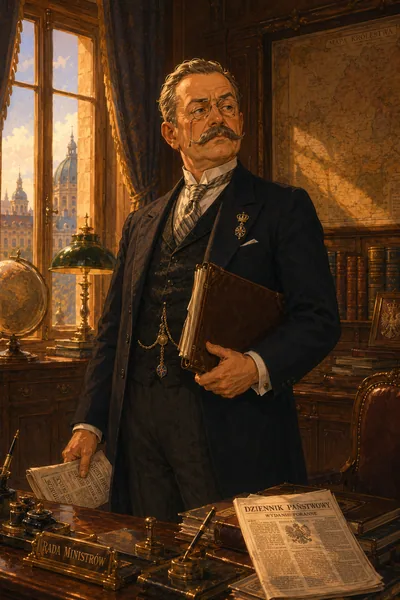
The "oldest minister" (he is forty-three), who drinks a glass of water whenever he means to talk for a long time. It is his careless note that starts the first war. He hides the king's disappearance behind a porcelain doll and threatens to resign when things get awkward. Over time he becomes a useful, if slippery, partner who helps catch the traitor at court. When the kingdom collapses he pretends not to be at home, and before the last war he advises paying the enemy off.
"Very well, let there be war."The note he writes in blue pencil, chapter 1
The Minister of War
The only soldier in the council
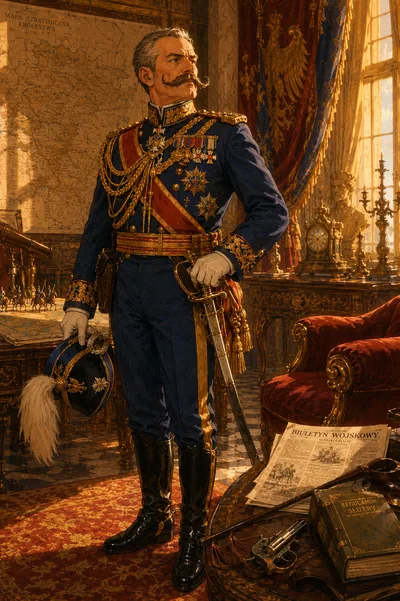
The minister everyone fears because he wears a sabre and a revolver. He is also the plainest and most loyal of them: he obeys the king's ten-minute ultimatum to the second and is the only minister not arrested. His plan wins the opening battles of the first war. Before the last one he gives Maciuś an honest count of what is left and swears that the army will follow its "hero-king". He keeps insisting that cannons matter more than chocolate.
"The worst of it, my gentlemen," said the Minister of War, "is that no one will be afraid of such a little king."The Minister of War, chapter 1
The journalist
Newspaper man · secretly a spy
A clever, pleasant-voiced young man with long hair who talks his way into an audience and gives Maciuś the idea of a children's parliament and a children's newspaper. For a long time he seems the king's best adviser. In fact he is a foreign spy. His paper praises Maciuś while the country falls apart, he manipulates Felek and forges documents, and finally a fake proclamation that turns the other kings against Maciuś. He is the witness against Maciuś at his trial. There is no portrait of him, which suits a man who is never quite what he seems.
"One does not give children revolvers."The journalist, disarming Maciuś, chapter 45
The old king and his son
Foreign kings · the first host and the final enemy
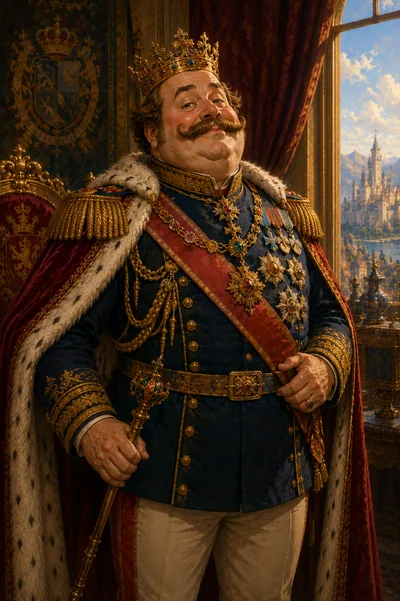
The old, grey-haired king gives Maciuś the grandest welcome of his foreign tour, and later gives him a sea port. He is fond of the boy. His eldest son is not. Jealous and ambitious, the son builds secret fortresses, bribes a traitor at Maciuś's court, takes over the throne from his father and invades. He scrawls a two-word insult on Maciuś's peace offer, and at the end he wants the "nasty little wolf cub" shot and humiliated. A second foreign king, the "friend of the yellow kings", makes up the three enemy powers with the Sad King.
"There are no fools!"The young king's reply to Maciuś's offer, chapter 48
Irenka
A fire-brigade captain's daughter
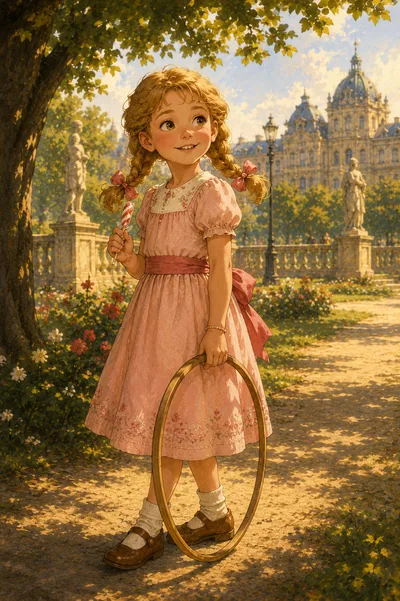
The little girl who asks Maciuś to play ring-a-ring on his first walk in a public garden, with no idea he is the king. Her wish for an enormous doll gives Maciuś his first taste of giving an order that is actually carried out. The doll makes her famous and sets thousands of children writing to the king. The same doll-maker later builds the porcelain Maciuś.
"If my papa were a king, he would have to buy me a doll that reaches right up to the ceiling."Irenka, chapter 2
The foreign tutor
Maciuś's first teacher
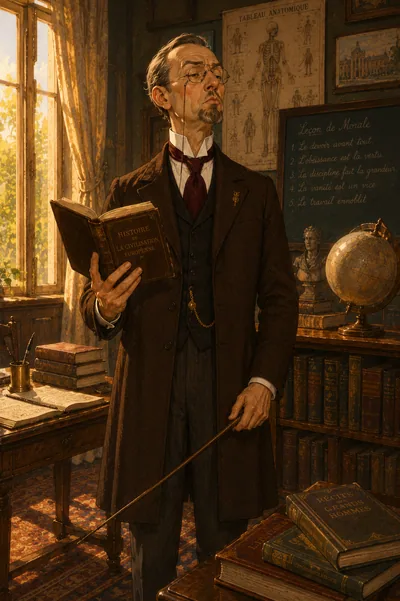
The stiff tutor of Maciuś's early years, who answers the boy's questions with a shrug and a sour face. The brandy and salmon the boys take to the war come from his private treats. After the war Maciuś replaces him with the captain, and the tutor is left teaching only languages. He is Korczak's picture of the teacher who never listens.
"Always that boring foreign tutor, who looked as though he had just swallowed a whole glass of strong vinegar."Maciuś's thoughts, chapter 2
The captain, Staś, Helcia and others
The captain is the young lieutenant who commands Maciuś's unit in the trenches, teaches him geography between the shells, and is promoted to captain. After the war Maciuś makes him his teacher and moves his family into the palace. He once fought in Africa with the foreign legion and joins the journey to Bum-Drum. Staś and Helcia are the captain's children, Maciuś's well-behaved companions at lessons and by the sea (Helcia quarrels with him over a mushroom). The Minister of Justice can quote a law, volume and page for everything; asked how long it takes to understand it all, he answers: "About fifty years, I should think." The Master of Ceremonies guards court etiquette, cries when Maciuś breaks it, and is delighted when the king comes home from the war on a horse, "not on petrol". The old professor, who knows fifty languages, interprets in Bum-Drum's land and teaches Klu-Klu. The legless pilot, a veteran with one eye, flies Maciuś across the desert and dies soon after landing. Antek is a pickpocket in the children's parliament who leads the jeering at Maciuś and Klu-Klu, yet stays with the king in the lion house at the end.