Chapter 1
The Little Heir
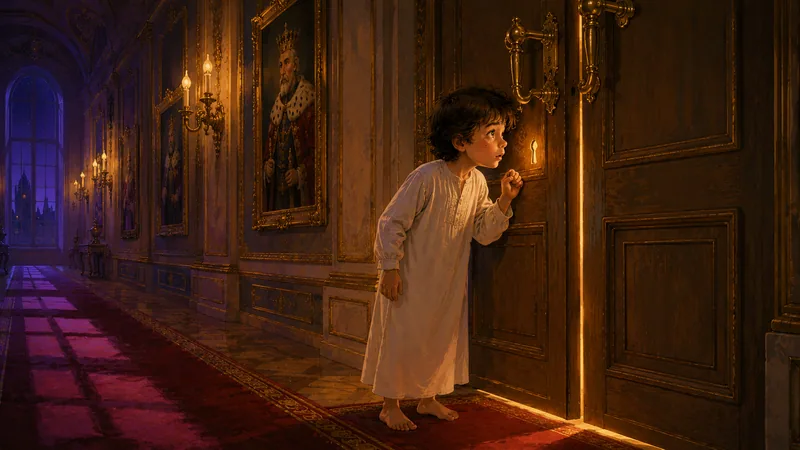
The old king is dying. Behind the door the ministers argue about the throne — and little Matt, in his nightshirt, listens and understands that from tomorrow everything will change.
Janusz Korczak · a Polish children’s classic · 1922
A little boy becomes king. He goes to war as an ordinary soldier, locks his ministers up, travels to the land of the cannibals and builds a parliament for children. Then he learns how hard it really is to rule.
From the palace doors to the front line, the desert and a children’s parliament — twelve scenes from Korczak’s novel. No spoilers for the ending. Click any picture to see it full size.
Chapter 1
The old king is dying. Behind the door the ministers argue about the throne — and little Matt, in his nightshirt, listens and understands that from tomorrow everything will change.
Chapter 9
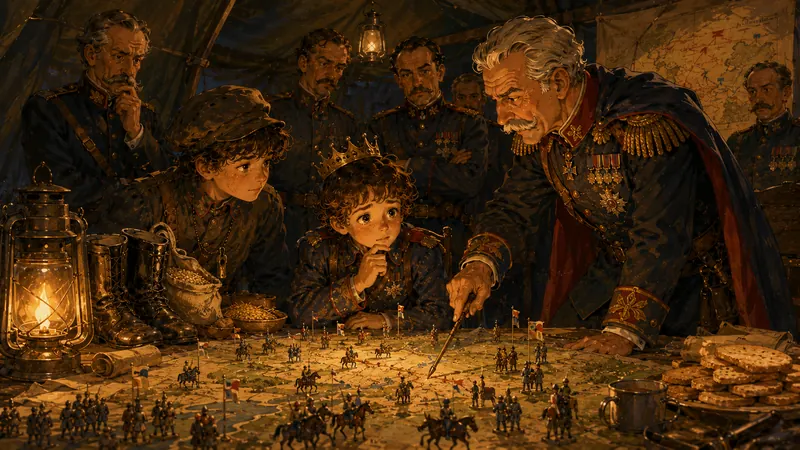
Matt slips out of the palace and goes to war with Felek as an ordinary soldier. In the trenches, by lantern light, he finally understands why the ministers kept talking about boots and oats.
Chapter 14
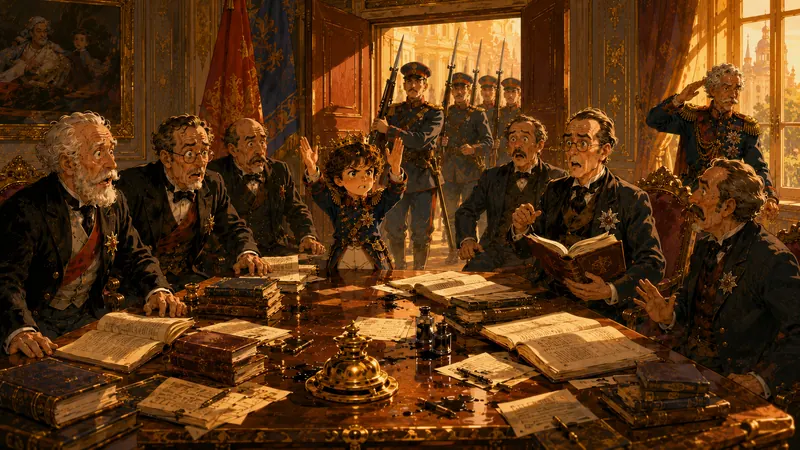
After the war the ministers only complain: no money, broken railway cars. Matt has had enough. “I arrest you all!” — and for the first time he truly rules on his own.
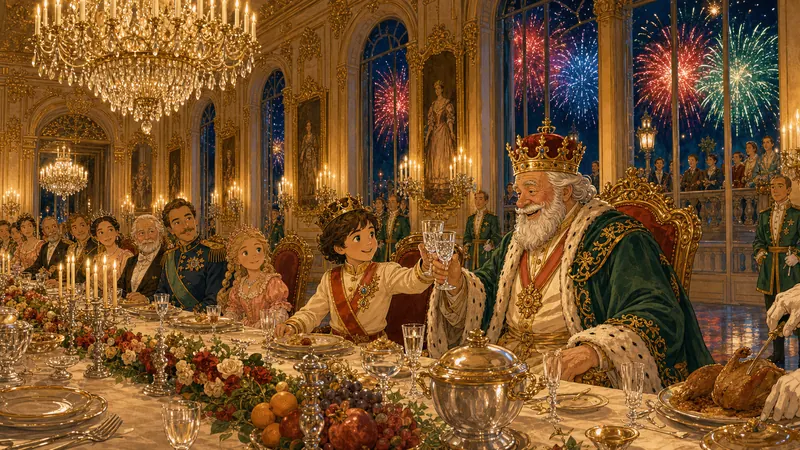
Chapter 17
An invitation from the foreign kings: a royal train, a parade, a banquet and fireworks. Matt takes in the splendour and begins to see that not every king is his friend.
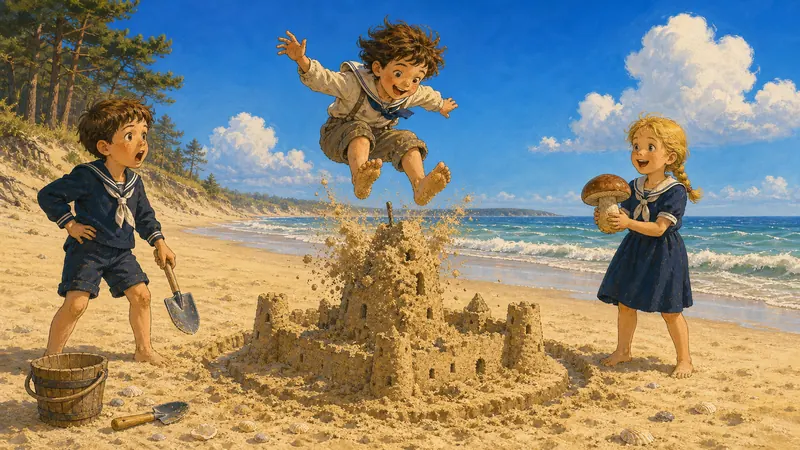
Chapter 19
A seaside holiday with the Old Doctor: sandcastles, waves and the first big ideas for reforms — for every child in the kingdom.
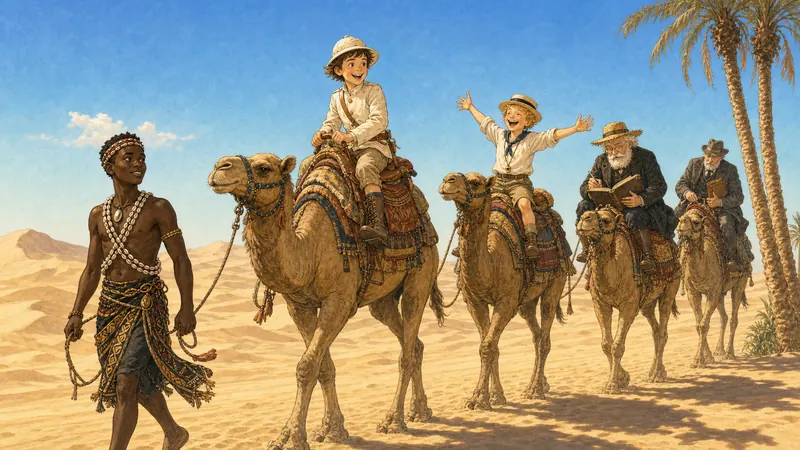
Chapter 21
A camel caravan sets off across the desert. Matt travels deep into Africa, to King Bum-Drum’s land — where no white king has ever dared to go.
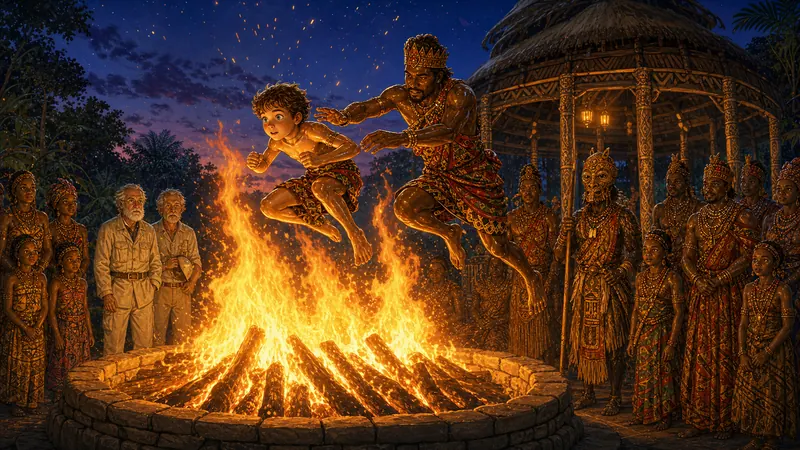
Chapter 23
A friendship ceremony among the cannibals: snakes, a pool of crocodiles and a leap through fire. Matt passes every test — and meets brave Klu-Klu.
Chapter 27
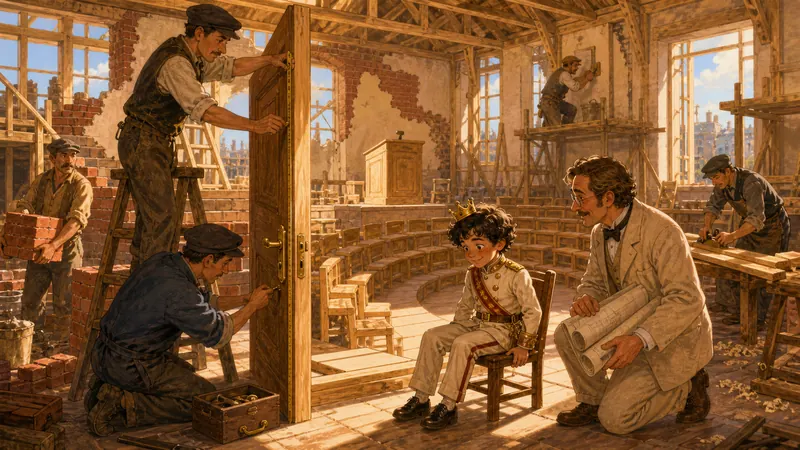
Matt builds two parliaments: one for grown-ups, one for children. In the second the door handles are lower, the chairs are short and the windows let the little deputies see the street.
Chapter 30
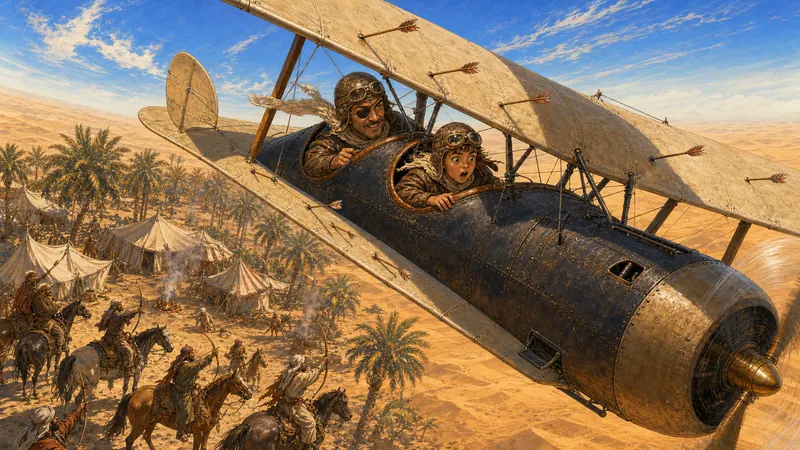
The aeroplane dips low over an oasis — and arrows fly up from below. The pilot opens the throttle: “This may be the last flight of my life.”
Chapter 32
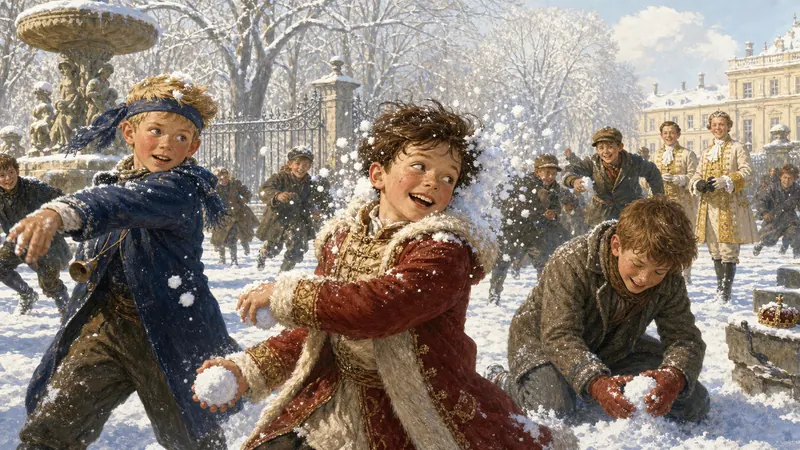
Winter in the capital and an enormous snowball fight. For a moment the king is just a boy again — before the ministers call yet another council.
Chapter 40
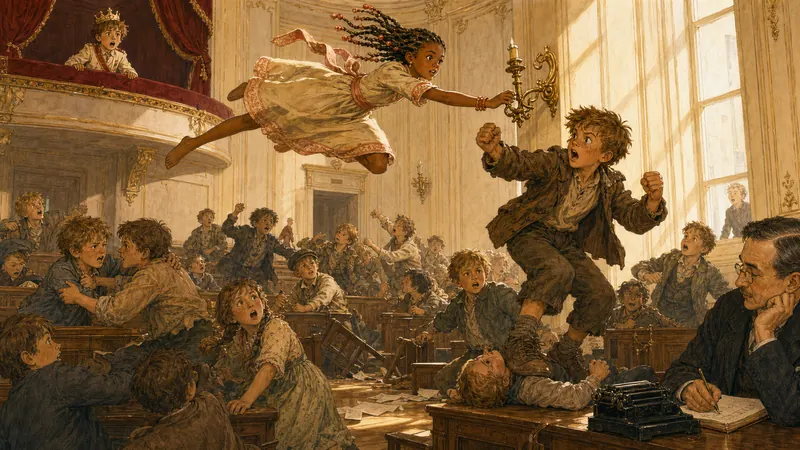
The children’s parliament ends in chaos: shouting, quarrels and Klu-Klu leaping across the hall. Governing children is no easier than governing adults.
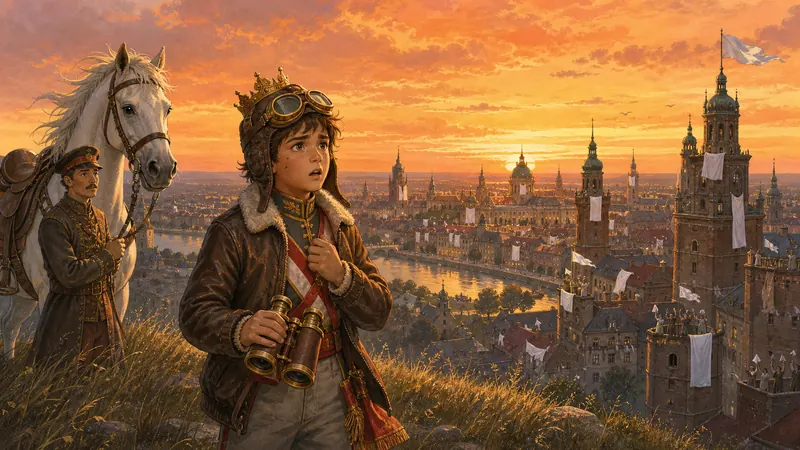
Chapter 50
War returns. From a hilltop Matt looks at the capital through his binoculars — and cannot believe his eyes: white flags are flying from the towers.
Chapter 53 · finale
Betrayal, a trial and a verdict. How the reign of the world’s youngest king ends — you’ll hear for yourself. And then there’s the sequel.

The book · audiobook
A nine-year-old boy becomes king — war, a children's parliament, a desert island. Korczak's beloved novel about idealism, power, and growing up too fast.
🔊 In the audiobook the young king keeps his original Polish name — Maciuś, pronounced MAH-choosh.
Voice: licensed AI narration (ElevenLabs), no cloning of real narrators — labelled in line with the EU AI Act. Play the sample and judge for yourself.
Two editions · one story
The English audiobook of King Matt the First is published in two editions: the complete audiobook (10 h 8 min, 53 chapters) and a serial in 10 parts. Each part is a self-contained slice of the story that you buy, read and listen to separately — a pocket-money way to start, and you own every part forever.
Dramatis personae
A nine-year-old king, his ally from the park, the doctor, ministers who have no idea how to govern a child — and a girl from Africa who can do everything he can't.

A nine-year-old boy who loses his father and becomes king within three days. He still plays with tin soldiers, yet already has to receive foreign ambassadors — in a stiff little uniform, his hand offered exactly the way his tutor taught him.
Stubborn, curious about the world, fair to a fault — and lonely in a way no other child on earth knows. "I'll pay them back," he whispers at his dying father's bed, hearing the ministers raise a toast to his health with glasses of wine.

Son of a palace guard — the first boy Matt meets outside the palace. With Felek he runs away to war, with Felek he climbs the fence of the royal park, with Felek he learns what the world of ordinary children looks like.
First friend
The same doctor who treated Matt as a baby and who holds him on his knee at his dying father's bed. Quiet, wise, promising nothing — the only adult in the palace Matt truly trusts. A self-portrait of Korczak himself.
Ally
The head of government with a little bell on his desk and a red-and-blue pencil. He writes with the blue end: "very well, let there be war", pretending the foreign ambassador's threat doesn't concern him. Cares more about good wine than about a nine-year-old king.
Corridors of power
A general in uniform, terrified that nobody will fear a child-king. "Matt cannot even write yet," he says reproachfully. Later it is he who leads the army into the war in which Matt escapes the palace to fight as the common soldier Tomek.
War
The fire-brigade captain's daughter, met in the garden, to whom Matt writes letters from the war — and never sends them. The first girl who makes the king forget how to speak — and who understands him better than all the ministers put together.
Letters from the war
A strict tutor sent from abroad to "shape" Matt into a king. He teaches the courtly bow, the French greeting and protocol — everything you have to forget if you want to really talk with Felek in the courtyard.
Etiquette
One of the three rulers who declare war on Matt when they hear a child has taken the throne. Confident, dismissive — until the moment the little king literally escapes his own palace and wins the first battle.
Adversary
The ruler of a neighbouring country who lost his wife and child — and the only one who understands what loneliness on a throne means. He gives Matt his first real adult-to-adult conversation. After the war he becomes his closest ally.
Empathy
Daughter of King Bum-Drum, the bravest girl in the book. She shoots a bow, speaks four languages, learns to read and write in two weeks. Brought to Europe by Matt — she shows that a child can do everything adults don't even try.
Smartest in the palace
Ruler of an African kingdom, whom Matt sets out to meet in person — travelling by caravan. Korczak overturns every stereotype of his era here: Bum-Drum is dignified, just, and sharper than many a European minister.
Distant ally
She appears to Matt in his hardest moments — quiet, kind, nameless. A memory of his mother? The imagination of a lonely boy? Korczak leaves that to the reader. The only person Matt is not ashamed to cry in front of.
Memory of a motherFrom the palace to the island
Fifty-three chapters in which a boy becomes a king, a soldier, a reformer — and, in the end, a prisoner.
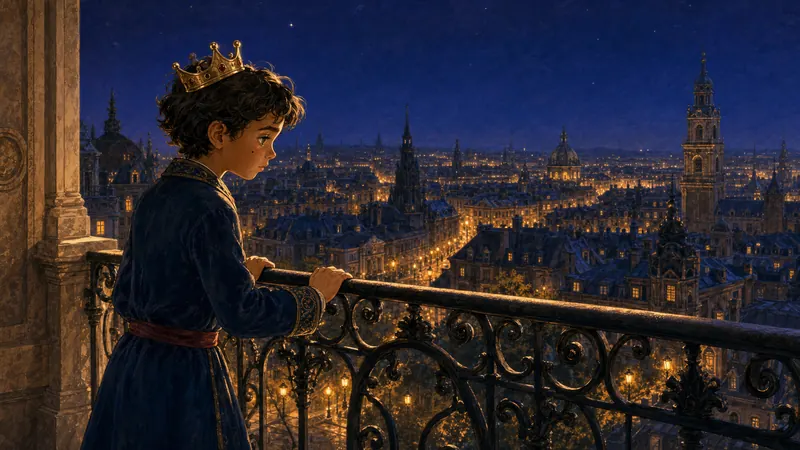
Ministers in the council hall, door-handles too high, the father's bed. Matt receives the crown and a whisper in his head: "I'll pay them back."
Three foreign kings declare war when they hear a child has taken the throne. Matt escapes the palace and fights as the common soldier Tomek.
In the trenches Matt gets to know Felek. He writes Irenka letters he never sends. He returns to the palace with a new friend.
Matt builds a children's parliament, gives every child the right to sweets and chocolate, brings Klu-Klu from Africa. The ministers laugh. The treasury weeps.
Not the sad king but someone else declares war. Matt loses. The state falls. The reforms are undone.
Matt is exiled. Korczak (1922) leaves the reader with the question: did a nine-year-old reformer ever stand a chance?
A palace game
Flip the cards and find the pairs. The fewer the moves, the better a vizier you are.
From the audiobook
In our English audiobook the little king keeps his original Polish name — Maciuś (say: MAH-choosh).
The ministers locked the door so that no one would disturb them; they lit the electric lamps — and said nothing. For it is not easy to say what should be done when the King is dying and his son is only nine years old — and cannot even write yet.
At last the Minister of Justice spoke:
"By law, after the death of the King, his oldest son ascends the throne. And the King has only one son — little Maciuś. So Maciuś must become king."
The Minister of War all but wrung his hands:
"Maciuś cannot even write yet. Who will be afraid of such a king?"
And then the door swung open — for when they had sent for the doctor, they had forgotten to lock it again. In walked a foreign ambassador, in a high stiff collar, an even higher hat in his hand, and said:
"I come in the name of my king, and I demand that Maciuś the First become king. And if you refuse, there will be war."
The Prime Minister shrugged his shoulders, as if it did not concern him in the least, and wrote on a sheet of paper with the blue pencil: "Very well, let there be war." Then he rang his little bell and called for good wine.
Maciuś meanwhile stood in the corridor, barefoot on the cold floor, in nothing but his nightshirt. In the royal palace the door-handles were so high that little Maciuś could not open the door by himself. From behind the door came laughter and the clink of glasses, and someone called out:
"Let us drink to the health of our defender, the great King Maciuś the First!"
And someone else added, quietly, but clearly enough:
"I'll stake my head on it — the King will not last the week."
Maciuś went on. The old doctor was already waiting in the bedroom, sitting beside his father's bed and holding his hand. The King opened his eyes, looked at his little son, and whispered:
"And I don't want to die. I don't want to leave you, my son, all alone in the world."
Maciuś did not answer. He only thought, hard and quiet — so that no one would hear: "I'll pay them back for it, when I am king."
So began the reign of Maciuś the First. Everything else — the wars, the children's parliament, Klu-Klu, the desert island — comes later.
Like the beginning? The whole royal story is waiting — complete edition or 10-part serial.
🎧 Buy & listenIn the app
First 5 minutes free. The whole book — or 10 parts — in the store.
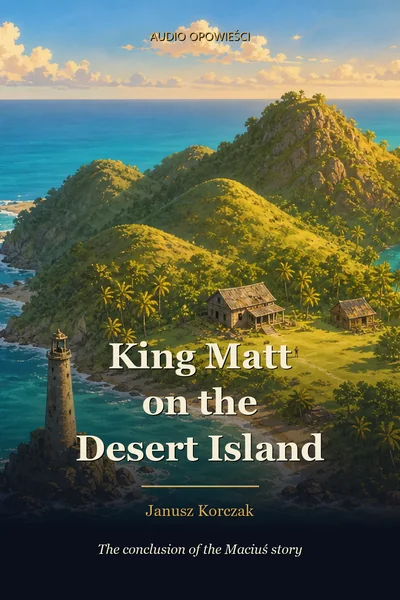
The sequel
The boy who was king is sent into exile on a desert island — the end of Matt's story. 7 parts, English audio.
Also listen
Janusz Korczak (1878–1942) was a Polish-Jewish pediatrician, educator, and author whose life's work was devoted to children's rights and dignity. He ran an orphanage in Warsaw and wrote landmark works on child pedagogy alongside beloved novels. When the Nazis ordered the deportation of his orphanage children to Treblinka, Korczak refused to abandon them and was murdered together with his charges. He is remembered as one of the pioneers of children's rights worldwide.
Korczak's classic, read across generations. Suggested age 9+ — the protagonist is a nine-year-old king, so children identify with Matt easily. Older readers and adults will find the serious threads: a children's parliament, war, the weight of decisions.
Yes — the production is safe with nothing that needs adult supervision. The book does have serious themes (death, war, isolation on a desert island), so younger listeners may want to talk through them with a parent. The app remembers the last play position.
Around 10 hours 8 minutes across 53 chapters. Listen at your child's pace — a few chapters per evening, during the school commute, in the car. First 5 minutes free in the app.
Yes — King Matt the First is also published as a 10-part serial edition. Each part is bought separately in the store, so you can read and listen piece by piece at a lower entry price, and you own every part forever. Prefer the whole story at once? The complete edition is a single purchase — both live in the same app.
0 ads. No nagging purchases mid-listen. You buy a specific book once and own it forever — no subscription, no per-chapter fees. The Android and iOS apps are live.
Yes — one family account is enough. Siblings can listen to the same purchased book on different devices. Playback position is per device, so each child keeps their own spot in the chapter.
The narration is performed by a licensed synthetic voice (AI, ElevenLabs) — no cloning of real narrators. We label it on every title, in line with the EU AI Act (art. 50). The text, illustrations and music are the work of people. Play the free 3-minute sample with the ▶ button on this page.