Character guide · Kornel Makuszyński · 1937

The Devil from the Seventh Grade — characters

Who is who at Bejgoła and beyond: the schoolboy detective, the family he helps, the colonel who hid a fortune in 1813, and the men trying to steal it. Portraits come from our illustrated English audiobook.

The Devil from the Seventh Grade — audiobook cover

Kornel Makuszyński fills his 1937 mystery with eccentrics, and most of them are lovable. The descriptions below stick to what the novel itself tells us. They contain mild spoilers about who belongs to the gang; the solution of the riddle is covered in the full summary.

The detective and his friends

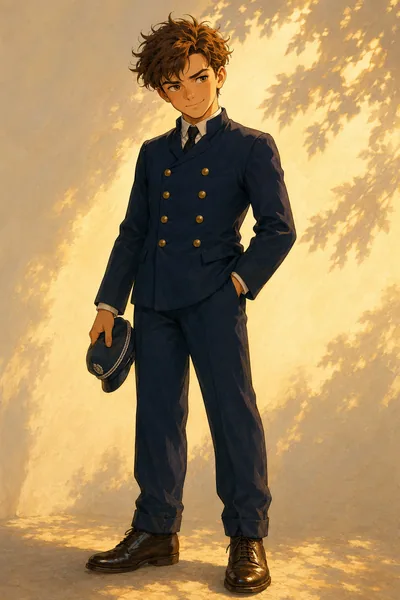
Portrait of Adam 'Adaś' Cisowski, the seventeen-year-old schoolboy detective

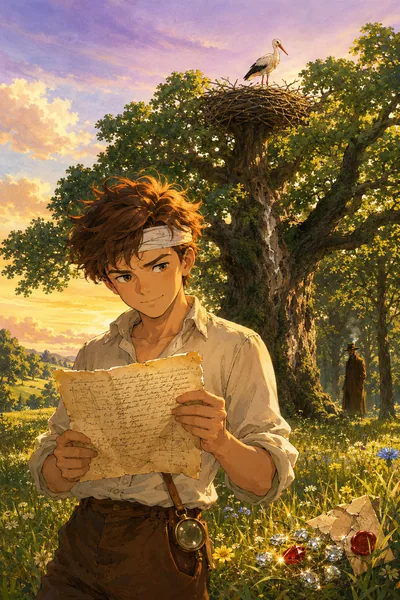
Adam "Adaś" Cisowski

The "devil" of the title · seventeen · Warsaw schoolboy

A sturdy, dark-haired pupil at a Warsaw gymnasium and the brightest boy in his school. He earns his nickname when he confesses to having cracked Professor Gąsowski's examination system — the old man calls him "You devil! You little Satan!" Adaś observes patiently, never loses his temper, and reasons from small things: handwriting, ink, a single thread. He is also honest to a fault, kind to weaker boys, rather too quick to fall in love, and humble about his gift: "There is no secret in the world that cannot be guessed," he tells the Professor — but he fears looking like "a plain blockhead" when the stakes are real.
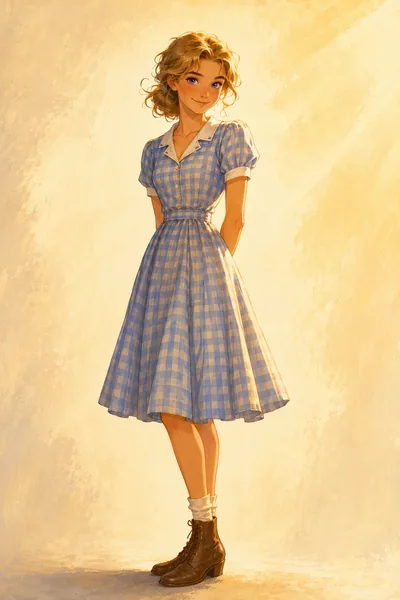
Portrait of Wanda Gąsowska, the Professor's niece with violet eyes

Wanda Gąsowska

The Professor's niece · Iwo's daughter

Tall, slender, pale-gold-haired and famous for her violet eyes, Wanda lives most of the year with relatives in Wilno, where she goes to school, and has come to fetch her uncle to the country. Her uncle calls her "the goat"; her mother says she has climbed every tree and ridden every horse. She is far stronger than she looks: when Adaś is knocked out in the dark, she carries him back to the house herself. Adaś falls for her at first sight, and she is quietly on his side from the very first meeting.

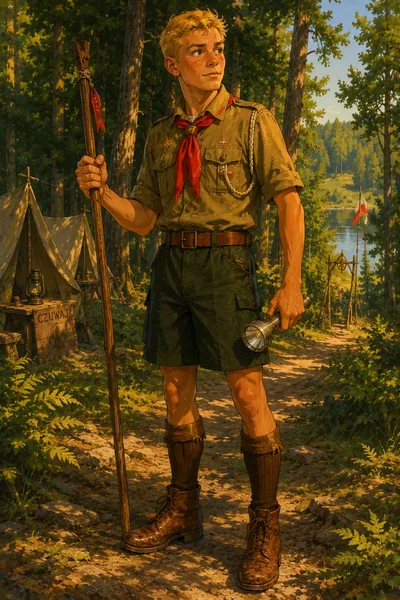
Portrait of Staszek Burski, Adaś's classmate and scout leader

Staszek Burski

Adaś's benchmate · scout leader

A tall, slim, capable but impulsive boy whose sprawling handwriting gives him away in Chapter 2, when he pockets a classmate's beautiful fountain pen. Adaś sorts it out privately and never tells anyone, and Burski never forgets it. In the summer he commands a scout camp across the lake from Żywotówka; it is he who breaks down the cellar door in the storm and pulls Adaś out. From then on he is Adaś's right hand, even helping him bury a decoy box in the dark.

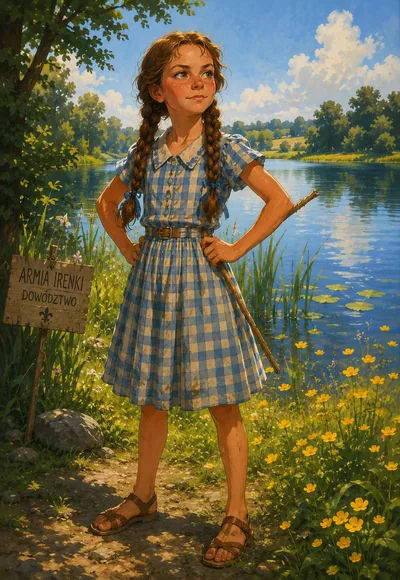
Portrait of Irenka Niemczewska, the girl-general of Wiliszki

Irenka Niemczewska

The girl-general of Wiliszki

A bold girl with scraped knees who commands a noisy band of children at the neighbouring manor of Wiliszki. Her mother has made her translate an old French letter for some strangers, and she gladly hands the chore to the wandering guest — without realising that the letter is the colonel's message of 1813 and that the guest is Adaś. The children's families also appear in Makuszyński's earlier novel The Broken Sword, a joke the book makes openly.

The Gąsowski family and Adaś's home

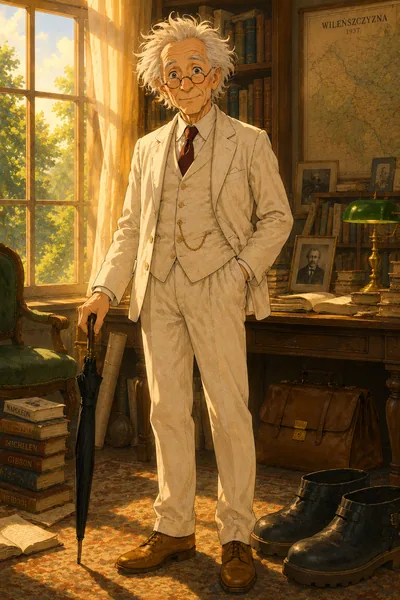
Portrait of Professor Gąsowski, the absent-minded silver-haired history teacher

Professor Gąsowski

History teacher · Wanda's uncle

A small, silver-haired man with permanently astonished eyes who has taught for over thirty years, worships Napoleon and cannot forgive Hannibal. He is legendarily absent-minded: he keeps unposted letters in his pocket, loses his left shoe on a bookshelf and never gets Adaś's name right, calling him "Piotruś" for most of the book. Behind the comedy is a deeply good man who has shared his last penny with his brother's family. It is he who brings Adaś to Bejgoła, and he who, kneeling over the treasure, reminds him what such stones have cost in human blood.

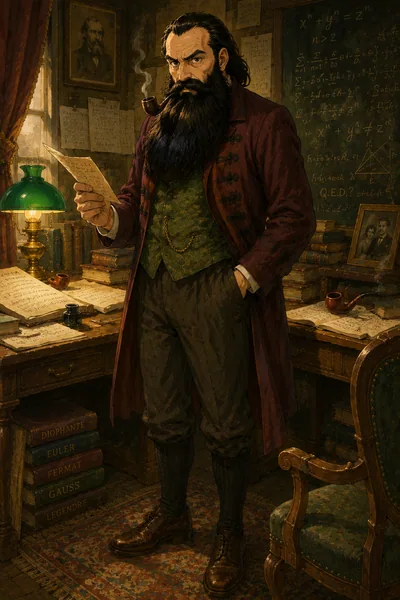
Portrait of Iwo Gąsowski, the bass-voiced amateur mathematician with a black beard

Iwo Gąsowski

Wanda's father · master of Bejgoła

The Professor's younger brother: a small man with a booming bass "well beyond his means" and a huge, dyed black beard. For fifteen years he has chased a proof of Fermat's famous theorem, scribbling equations on the barn doors while the estate sinks into debt. He sneers at history and poetry, yet he is the one who spots Adaś's hidden acrostic. When his brother tells him how his wife has suffered, he burns his papers — and his black beard turns out to matter to the riddle more than anyone expected.

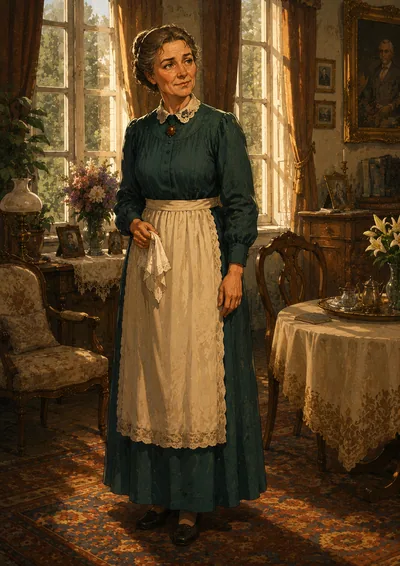
Portrait of Mrs Gąsowska, lady of the Bejgoła manor

Mrs Ewa Gąsowska

Wanda's mother · runs the estate

A quiet, hard-working woman with "an angelic soul and a perpetual head-cold", who carries the poor little estate on her back while her husband calculates. She was the first to protest when strangers tried to buy the house, and her French is good enough to describe the rat-faced visitor precisely. Her name matters to the plot: Adaś deliberately calls her "Mrs. Maria" in his forced letter, and that wrong name tells the Professor something is amiss.

Portrait of Doctor Cisowski, Adaś's father

Doctor Cisowski

Adaś's father · Warsaw physician

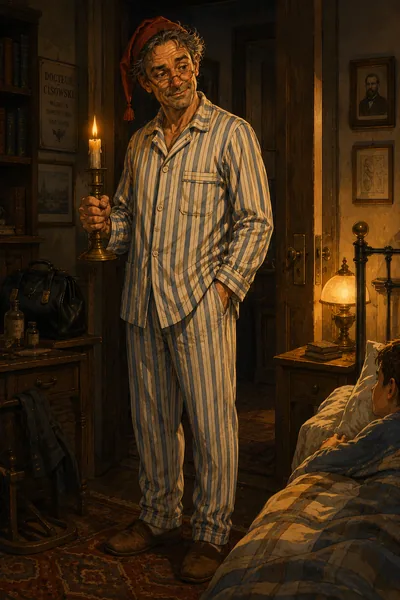
A heart specialist who runs his practice from the family flat, next door to four shrieking younger children. His big scene is short and comic: at one in the morning he appears in striped pyjamas, convinced his son has gone mad for shouting "I've found a hundred zlotys!", and prescribes a cold towel and bed.

The past: 1813

Portrait of Colonel Kamil de Berier, Napoleonic officer of 1813

Colonel Kamil de Berier

Napoleonic engineering officer · signs his letter "Camille de Berier"

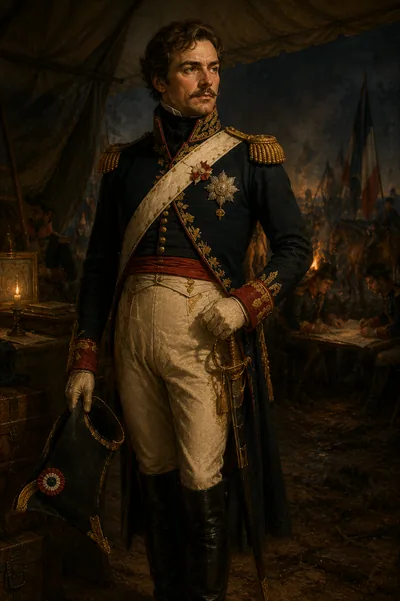
One of two ragged soldiers who reached Bejgoła in the winter after the retreat from Moscow, with frostbitten legs and a pack-bag he never let out of his sight. Lodged in the gardener's cottage, he crawled out on moonlit nights, calculated and drew, and sent his companion home with a sealed letter for his younger brother Armand, a captain of the Imperial Guard. His last coherent words to his host were "Those doors!"; his very last, "Vive l'Empereur!" Everything in the novel follows from what he hid and how cleverly he coded it.

The Frenchman and the gang

Portrait of the Frenchman who came to Bejgoła in search of the colonel's secret

The Frenchman

Treasure-hunter · later a prisoner

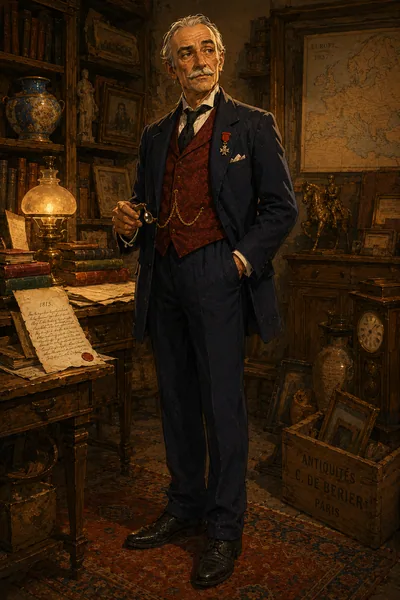
A small, nervous man with a "rat" face who first visits Bejgoła claiming to be writing about old houses, and scrapes at a door. The novel never gives his name. He found the colonel's letter in an old book bought from an antiquary and hired local help — a disastrous choice. When his men realise a fortune is at stake, they rob him, dislocate his arm and lock him in a cellar, where Adaś finds him. Freed, he redeems himself: when the rescue boat sinks, he saves the youngest scout with his injured arm, and he leaves money for Father Kazuro's poor. "I curse the day," he admits; greed has been his undoing.

Portrait of the Thin Man, the skeletal gang leader with a jumping Adam's apple

The Thin Man ("the Skeleton")

The gang's brains

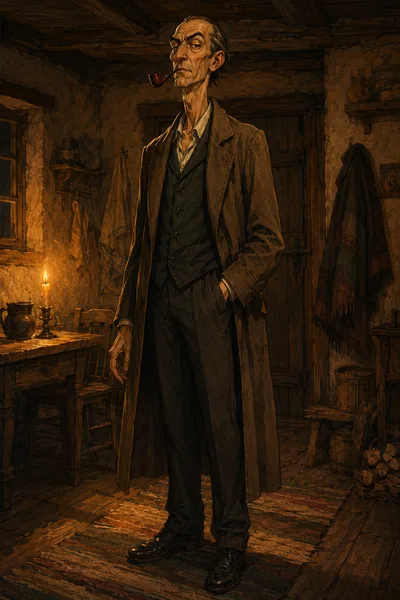
A living skeleton with a sharp, jumping Adam's apple, once a manservant to a friend of the Frenchman. He talks softly, hisses his threats "like a viper", and is cleverer and more controlled than his partner — it is he who stops the Painter from strangling Adaś. He is also treacherous to everyone: he secretly offers Adaś freedom behind his partners' backs, then ties him up again. Adaś calls him "a man of system" and, in the finale, uses exactly that against him.

Portrait of the Painter, the gang member posing as a wandering artist

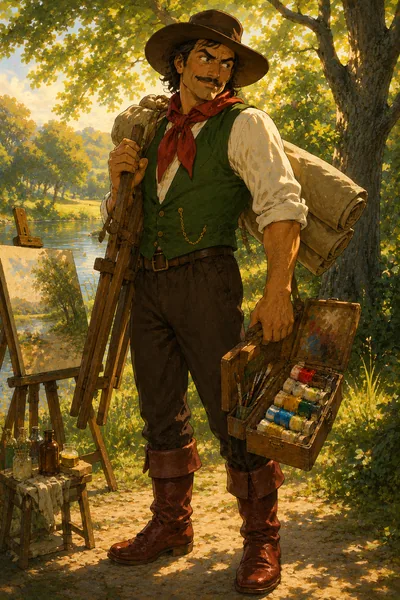
The Painter

Impostor artist · the gang's muscle

He turns up at Bejgoła with an easel, a paint-box and an elaborate way of speaking, but his hands are heavy and clumsy — "like a gorilla's", says Adaś — and he cannot paint a portrait. He is the man who struck Adaś down under the lone tree, and he steals Father Koszyczek's diary from Adaś's room. Short-tempered and violent, he nearly strangles Adaś when he finds the boy's copy of the translation.

Portrait of the Hunchback who keeps the gang's dogs

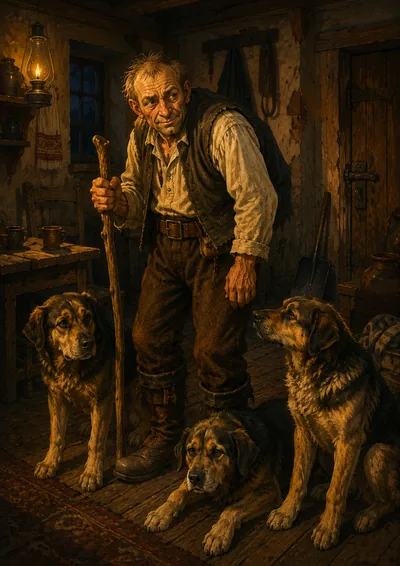
The Hunchback

Keeps house and dogs for the gang

A short, hunchbacked man who runs the three savage dogs at Żywotówka and helps to seize Adaś. Yet he is the gentlest of the three: he brings the prisoners milk and bread, gives the thirsty Frenchman drink first, and leaves the cellar door open for air. "That's not a bad man," Adaś concludes.

The village priest

Portrait of Father Kazuro, the kindly old village priest

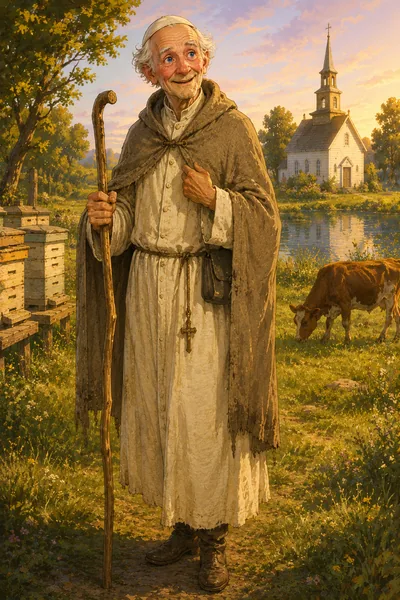
Father Kazuro

Old village priest · "Holy Innocents!"

A ruddy, white-haired priest who goes to bed at dusk to save kerosene, gives his bread away and fishes without a hook so as not to hurt the fish. He shelters the injured Frenchman without a question and, over a candle, tells Adaś the story that unlocks the case: how a wounded priest of 1863 was carried from the Gąsowskis' garden cottage on a door — the same door that now hangs in the little school he built. Later he arrives with the Frenchman's banknotes, unable to tell which one was meant for him.

Other characters

  • Father Jan Koszyczek — a relative of the Gąsowskis whose rambling old diary, found in the attic, records the arrival and death of the Napoleonic colonel.
  • Armand de Berier — the colonel's younger brother, a captain of the Imperial Guard, for whom the coded letter was written; according to the Frenchman, he fell at Waterloo.
  • Szostak — the poor sixth-former whose accounts a stray black thread made a hundred złoty short; later one of Burski's scouts.
  • Jasiński and Żelski — the classmates who nearly fight over the missing fountain pen.
  • Kaczanowski, Ostrowicki and Wnuk — the three boys at the centre of the examination duel in Chapter 1.
  • Ignaś Niemczewski — Irenka's brother, who sends a messenger to the local poet for the lines of Dante.
  • Mr Rozbicki — the poet living with the Gilewicz family across the water, who owns "everything that's written high, lofty and in rhymes", and supplies Inferno III, 10–11.
  • Janek Cisowski — Adaś's little brother, caught stealing ice cream by the dry-hands trick.
The Devil from the Seventh Grade — audiobook cover

English audiobook with illustrations

Hear these characters come alive

The complete English edition brings all thirteen chapters to life with scene illustrations. Voice: licensed AI narration (ElevenLabs), no cloning of real narrators — labelled in line with the EU AI Act. Play the sample and judge for yourself. Store availability depends on your country.