Character guide · Janusz Korczak · 1923 · Book 2

King Matt on the Desert Island — characters

Old friends from King Matt the First, the kings who decide the boy's fate, and the new people he meets in prison, on the island and back home. The portraits of returning characters come from our illustrated audiobook of Book 1.

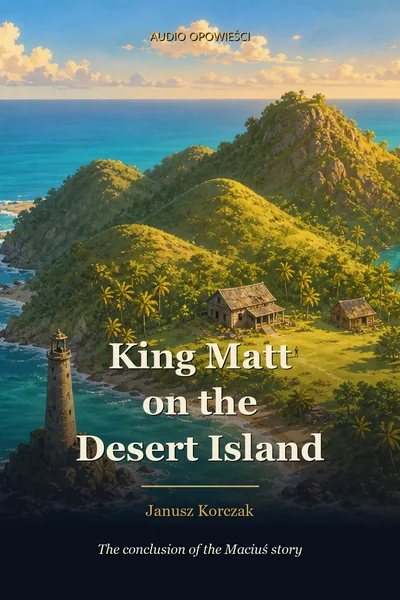
King Matt on the Desert Island — audiobook cover

This is the second volume of Korczak's story, so several characters carry over from King Matt the First. The notes below describe them as they appear in this book and contain spoilers, including the ending. For the plot in order, see the part-by-part summary.

Maciuś and his friends

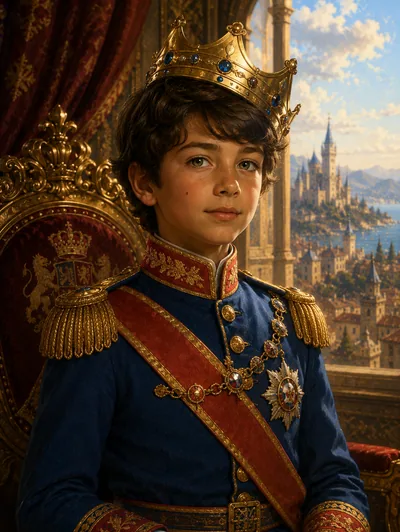
Portrait of Maciuś, the boy king, from the illustrated King Matt the First

Maciuś (King Matt)

The boy king · "King Maciuś the Reformer"

Defeated in war, Maciuś begins the book as prisoner number two hundred and eleven and still insists on being addressed as a king. He escapes, hides as an errand boy and an orphan, and outwits the council of kings — then, worn out and blaming himself for all the deaths his reforms caused, chooses exile. On the island he becomes a thinker and a diarist ("My greatest mistake was that I was proud"). Later he is a prisoner again, a cowherd called Marcinek, and finally a factory worker who refuses to be treated as an exception. On his birthday he writes that he does not know whether he has turned eleven or twelve.

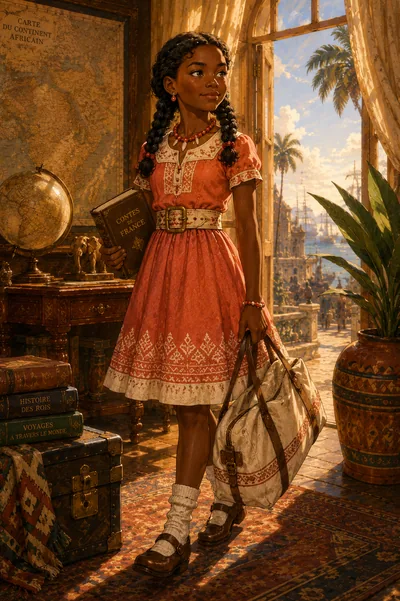
Portrait of Klu-Klu, the African princess, from the illustrated King Matt the First

Klu-Klu

African princess · Maciuś's most loyal friend

Bum-Drum's daughter, freed from prison early in the book. She smuggles Maciuś out of the capital as a "stuffed dog" in a crate and rows him across the sea to the kings' council; later she bursts into that council with warriors to free him. Her letters reach the island inside nuts carried by little postal rats. After her father's death she leads the children of her land in the disastrous holy war and calls Maciuś to help. At the end she travels by aeroplane, ship and train to be at his bedside. "Why, it is the greatest happiness to live, to work, and to fight so that the world may be better," she tells him.

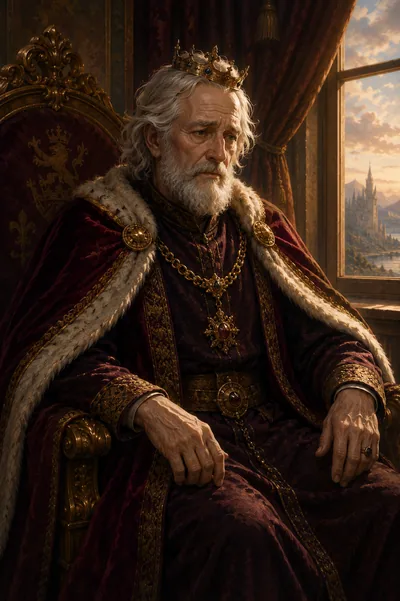
Portrait of the Sad King, from the illustrated King Matt the First

The Sad King

Maciuś's friend among the kings

A gentle, melancholy king who plays the violin and is no longer afraid to admit that he is Maciuś's friend. He shares his rented room in a fisherman's cottage with the runaway, begs him not to give up, and at the council makes the book's key speech: the arguments now used against children were once used against peasants, workers, women, Jews and Black people. He sends books and a spyglass to the island, and is still writing to Maciuś when the boy is back on his throne.

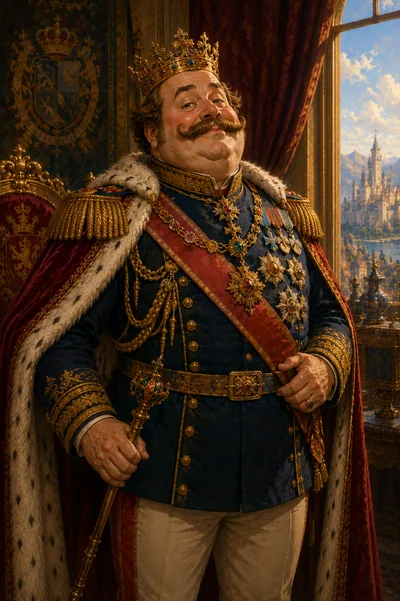
Portrait of King Bum-Drum, from the illustrated King Matt the First

Bum-Drum

African king · Klu-Klu's father

Among the white kings he pretends to be angry with Maciuś, sniffing ammonia to produce polite tears, but he secretly fears for him and fights the choice of island. He joins in the strange ceremony that saves the white kings' lives, then asks the council to think of Black children too. Believing the kings betrayed Maciuś, he declares war on them and is killed in the battle.

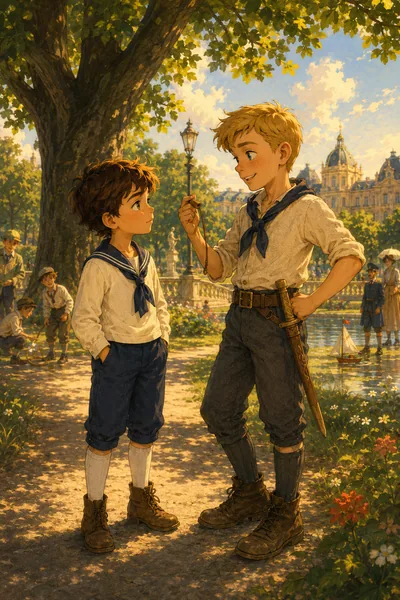
Portrait of Felek, Maciuś's boyhood friend, from the illustrated King Matt the First

Felek

Maciuś's first friend

On the island Maciuś remembers that Felek "took bribes, he stole, he cheated". In the last chapter Felek comes back thin, ragged and ashamed, sleeping under a bridge; "I don't know how to want," he says. Maciuś takes him in and finds him work, but Felek grows restless and quarrelsome, and his rage on the last Monday leads to the accident that kills Maciuś. Maciuś's last words to him are gentle: "Felek, don't grieve."

The kings and their men

Queen Campanella

A widowed queen with an orange grove

Pretty, childless and kind, she visits Maciuś in prison every day for the permitted fourteen minutes, brings him his canary and his mother's photograph, and asks the kings to give him to her. Maciuś's refusal is what makes him decide to escape. She dies horribly on the island of Fufajka, eaten by some of the warriors who came to rescue him; Maciuś later makes a little grave for her beside his canary's.

Colonel Dormesko

The famous sleepyhead

A heroic defender of the "Fourth Fort of Death" who dislikes children and sleeps through almost anything, which is why he is chosen to escort Maciuś — and why Maciuś escapes from his train. Obeying his orders to the letter, he delivers the trunk and the canary to the island. Pardoned, he later lives there as Maciuś's easy-going guardian, signing every request and taking photographs, until he is recalled.

Lord Pux

The "iron old man" of diplomacy

A silent diplomat with a pipe who tames the quarrelling kings by making them repeat themselves at ever earlier hours. He keeps perfect minutes, calls Maciuś a king when others will not, and tells him: "Your Royal Majesty has managed to master the situation."

The young king

Maciuś's enemy

He hates Maciuś, objects to every motion he makes, orders a doctor to declare him mad and finally has him kidnapped and imprisoned under a false name. Stripped of his conquests and later abandoned by his own generals, he rides to Maciuś under a white flag and kneels to him. Maciuś forgives him, and his people declare a republic.

Marquis Amary

The new commander of the island

A young, handsome captain of lancers sent to the island as a punishment for duelling and insulting a general. He buries Maciuś in circulars and complaints, stops the guards' dinner until Maciuś signs, and then, drunk one night, confesses that he is a distant cousin, deeply unhappy and in debt. "I thought the captain was wicked, but he is only very wretched," Maciuś writes.
On the island

Walenty

Soldier of the first guard

Maciuś's favourite among the guards: quiet, clear-spoken, good at mending nets and explaining dreams. He teaches Maciuś the violin. Later, back in his own country, Maciuś remembers his saying: "Life is bitter."

The lighthouse keeper, Alo and Ala

The children of the sea

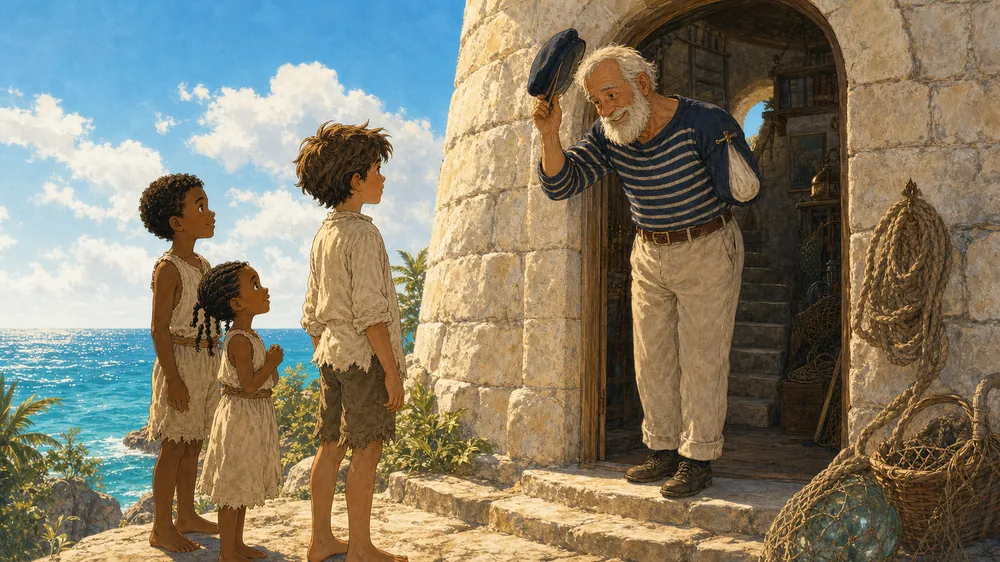
A kind old sailor who lost a hand in a shipwreck keeps the lighthouse near the island. A year earlier a wave cast up two small children he could not understand; he named them Alo and Ala, "son of the sea" and "daughter of the sea". Serious Alo learns to read and count from Maciuś and gives him a shell "for teaching me"; tiny, stormy Ala calls him "Papa" and gives him a perfectly round pebble. Maciuś keeps both to the end, and it is Alo and Ala who bring flowers to his grave.

Illustration: the one-handed lighthouse keeper greets Maciuś, Alo and Ala at the lighthouse door
Chapter 18 in our illustrated audiobook.

Filip and Stefan

Boys of the new guard

Filip, Maciuś's orderly, secretly torments him — smoke through the keyhole, flies in his soup, stolen oars — until he kicks apart Maciuś's little cemetery and gets a thrashing. Afterwards he explains that he grew up in a brutal reformatory: "I never guessed that kings knew how to thump like that." Stefan is the quietest of the boys, a sickly lad with a cough who sends his whole pay home to his poor family; Filip promises Maciuś to stop picking on him.

Other characters

  • The switchman and his wife — the railway family who hide the runaway king for three days.
  • The sausage seller and his wife — a former policeman who takes "Janek" on as an errand boy; his wife lost her own son, Janek, in the war.
  • The orphanage director — a pompous educator, author of 365 Ways to Keep Children from Making Noise.
  • Emperor Pafnucy and King Orestes — kings who argue at the council for beating and starving disobedient children.
  • The hermit in the lonely tower — a silent old man in a grey cloak whom Maciuś meets once in the island's forest.
  • The jailer — a hard man in the harshest prison who, seeing his dead son in Maciuś, fakes his punishments and his death and helps him escape.
  • The village schoolteacher and the little artist — the kind teacher and the classmate who befriend "Marcinek".
  • Zosia — a shy girl whose letter thanks Maciuś for changing her father.
King Matt on the Desert Island — audiobook cover

English audiobook with illustrations

Hear the story of the boy who was king

The full English audiobook is illustrated throughout and comes as a complete edition or a 7-part serial. Voice: licensed AI narration (ElevenLabs), no cloning of real narrators — labelled in line with the EU AI Act. Play the sample and judge for yourself.